Compare · KPOS vs. Toast
The features you'd compare Toast on, KPOS has too. The difference is the hardware — one device, delivered ready.
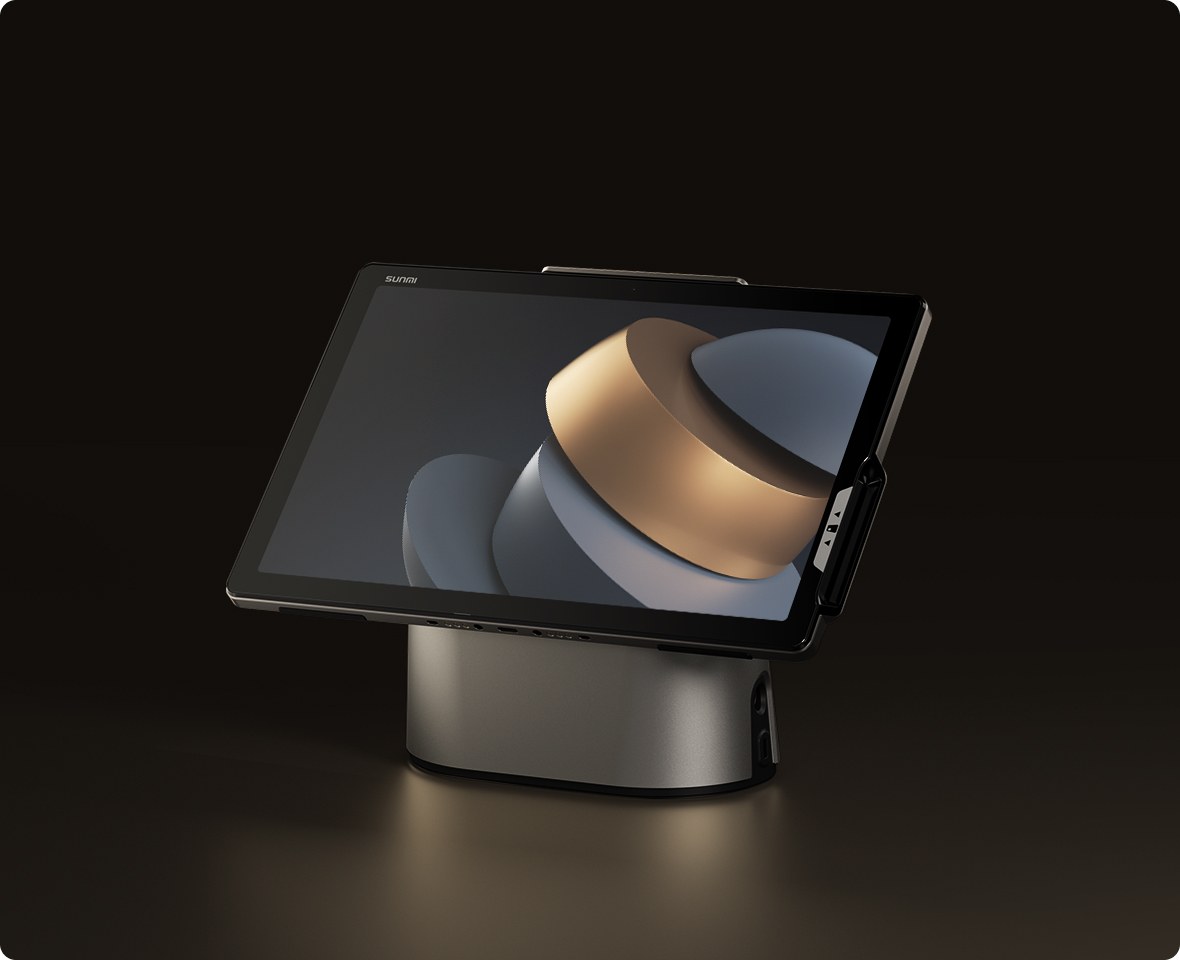
Toast set the bar for restaurant POS features, and we hold ourselves to it: table maps, coursing, pay at the table, kitchen display, offline mode, online ordering, loyalty, labor, inventory and multi-location are all here. Where KPOS is different is what sits on the counter and how it arrives: one all-in-one device that takes the order, the payment and prints the ticket, delivered with your menu loaded, by one company, open in two days.
- One device: order, pay, print
- Delivered with your menu loaded
- Live in 2 days
- Feature for feature, with sources
Front of house
Toast facts checked against Toast's own support and product pages on October 17, 2026. KPOS facts from the KPOS Product Handbook.
Table map and coursing
- Toast — Table management with server assignment; course firing options including automated firing (in-store orders; automated modes use a KDS).
- KPOS — Table map with status and time seated; coursing and delayed send; one ticket or per-course tickets as you prefer.
Order and pay at the table
- Toast — Toast Go handheld (Go 2: 6.4" screen, up to 24-hour battery; Go 3 current) and Mobile Order & Pay by QR code.
- KPOS — CPad PAY 11" or P3 MIX handheld with tap, chip and swipe built in; QR ordering from the guest's phone.
Split checks, tips, refunds
- Toast — Split by item or guest, with an optional manager permission; tip adjustment and refunds.
- KPOS — Unlimited splits and mixed tenders; adjust tips until the nightly batch; flexible refunds; card on file.
Kitchen and offline
Kitchen display
- Toast — Toast KDS; online and third-party orders fire to it automatically.
- KPOS — Built-in KDS on any KPOS device — no extra software; tickets from every channel route by station, bilingual.
When the internet drops
- Toast — Offline mode after about 40 seconds: cash and card payments continue (cards stored for later authorization); per Toast's documentation, orders don't sync between devices or to KDS until reconnected.
- KPOS — Ordering, cash, kitchen printing and KDS keep running on your local network with the host terminal; orders sync back automatically. Card payments offline depend on what your processor allows.
Online, delivery and guests
Your own online ordering
- Toast — Commission-free online ordering, the Local by Toast app (formerly Toast TakeOut), flat-fee delivery options.
- KPOS — KposGo web ordering and app, no commission; on-demand drivers when you need them; one app across participating KPOS restaurants.
Third-party delivery in the POS
- Toast — Direct integrations with DoorDash, Uber Eats and Grubhub; menus for those channels managed centrally.
- KPOS — Uber Eats, DoorDash, Grubhub, HungryPanda and Fantuan orders land in the POS and the kitchen without re-entry.
Loyalty, gift cards, marketing
- Toast — Built-in loyalty with points and birthday bonuses; physical and e-gift cards; automated email campaigns such as welcome and miss-you.
- KPOS — Members by phone number across every channel; points, NFC gift cards, Apple and Google Wallet cards; automated offers on join, birthday, 30 days away, milestones, slow days and new dishes.
Back office
Labor
- Toast — Sling by Toast scheduling with time-clock enforcement (Scheduling Pro); Toast Payroll; roles and permissions.
- KPOS — Employee accounts and roles; time clock with PIN or NFC employee card; labor cost in the owner app and reports.
Inventory
- Toast — xtraCHEF by Toast: invoice automation, recipe costing, inventory counts, actual-vs-theoretical reports.
- KPOS — Ingredient mapping — selling a dish depletes its ingredients — with stock on hand and reorder visibility.
Reports, owner app, AI
- Toast — Sales and product-mix reporting; Toast IQ, an AI assistant inside the POS.
- KPOS — Daily and batch reports, full order log, CSV export; K-Boss owner app in 11 languages with a daily AI recap, review alerts and unusual-discount alerts.
Multi-location
- Toast — Multi-location management: publish menus across locations, group-level reporting and controls.
- KPOS — Menus, members and reports in one back office; head-office accounts see the locations they are authorized for.
Where the difference is: the hardware, and how it is delivered
With the features this close, the decision comes down to what sits on the counter and who gets it running. Toast offers hardware and implementation services; the exact scope and fees sit in its written quote. Here is what KPOS does, as standard, for every restaurant.
One all-in-one device at the counter
Both run on Android. At the counter, Toast's Flex terminal takes its card reader as a separate unit, mounted on the back or cabled on the counter (the Toast Go handheld has its reader built in). KPOS CPad PAY and P3 MIX have tap, chip and swipe inside the terminal that takes the order and prints the ticket — one device, one step further on payments.
Delivered ready
Terminals arrive with KPOS installed and your menu loaded; we install on site and train the staff. Two days from kickoff to opening day once payments and menu materials are ready.
One company for all of it
Software, payments, hardware, installation and support come from KPOS. One call, in English or Mandarin, fixes anything.
Network and updates handled
A managed Wi-Fi router we monitor remotely; features ship to terminals over the air, so the counter stays current without a hardware swap.
Price: the friendlier quote for the same restaurant
Toast publishes a low starting price and sells much of the restaurant layer as monthly add-ons. KPOS prices the whole configuration once. Compare the same store, line by line.
What Toast publishes
Toast's own blog (2026) says its pricing starts at $0 per month for an eligible Starter Kit and $69 per month for the Point of Sale plan, with processing rates that differ by plan and custom pricing for larger configurations.
What Toast adds per module
Third-party pricing guides (2026) put Toast online ordering at around $75 a month, loyalty around $50, gift cards around $50, email marketing around $75, kitchen display screens around $25–35 each, payroll from around $90 plus a per-employee fee, and xtraCHEF inventory at roughly $100–200. These are guide figures, not Toast's price list — confirm them in your quote.
What KPOS does
One quote covers hardware, software and processing on your actual sales mix. The restaurant layer — kitchen display, online ordering and the guest app, loyalty and automated marketing, inventory, time clock, the owner app — comes with the system, not as a stack of monthly modules.
Built to be the friendlier price
For an independent restaurant, the total — hardware, software, processing and setup — is designed to come in under a comparable Toast configuration. Ask us to price the same store side by side; that document is the comparison.
Put the same store in both quotes
Same seat count, same number of order-and-pay devices and kitchen screens, same channels; hardware ownership or financing, software per location and device, every add-on, processing on the same mix, network equipment, contract length and cancellation terms.
Where the Toast facts come from
Each line above traces to one of these Toast pages, checked October 17, 2026. If Toast changes a page, the line gets re-checked.
Manage tables with Toast POS →
Table management, server assignment.
Manage course firing options →
Coursing; automated firing uses a KDS; in-store orders only.
Split checks on the POS →
Split by item or guest; optional manager permission.
Toast Mobile Order & Pay overview →
QR ordering and payment at the table.
Toast Go 2 dimensions →
6.4" screen, up to 24-hour battery.
Toast Tap (on-counter) installation guide →
Flex 3 card readers mount to the terminal back or connect by cable on the counter.
Toast Go 3 card reader →
Built-in reader on the Toast Go 3 handheld.
Offline mode (platform guide) →
What continues and what pauses offline; stored card payments.
Online ordering and delivery →
Commission-free ordering, flat-fee delivery.
Third-party delivery integrations →
DoorDash, Uber Eats, Grubhub direct to the POS.
Loyalty and gift cards →
Points, birthday bonuses, e-gift cards.
Scheduling by Sling in Toast Web →
Scheduling, time-clock enforcement, roles.
Inventory management (xtraCHEF) →
Recipe costing, inventory, cost reporting.
Multi-location management →
Menus and reporting across locations.
Toast IQ announcement →
AI assistant inside the Toast POS.
How much does a restaurant POS cost (Toast blog) →
$0 Starter Kit and $69 Point of Sale starting prices.
Toast pricing breakdown (UpMenu guide, 2026) →
Third-party figures for Toast add-on modules; not Toast's price list.
Toast POS review (The Restaurant HQ, 2026) →
Third-party figures for Toast plans, processing and hardware kits.
Switching from Toast? Your menu moves with you →
Toast's data export gives us a clean file to convert; members come across too.